Explore the Universe
Smart Cities
Technology working together for more livable places.
Explore with Dali
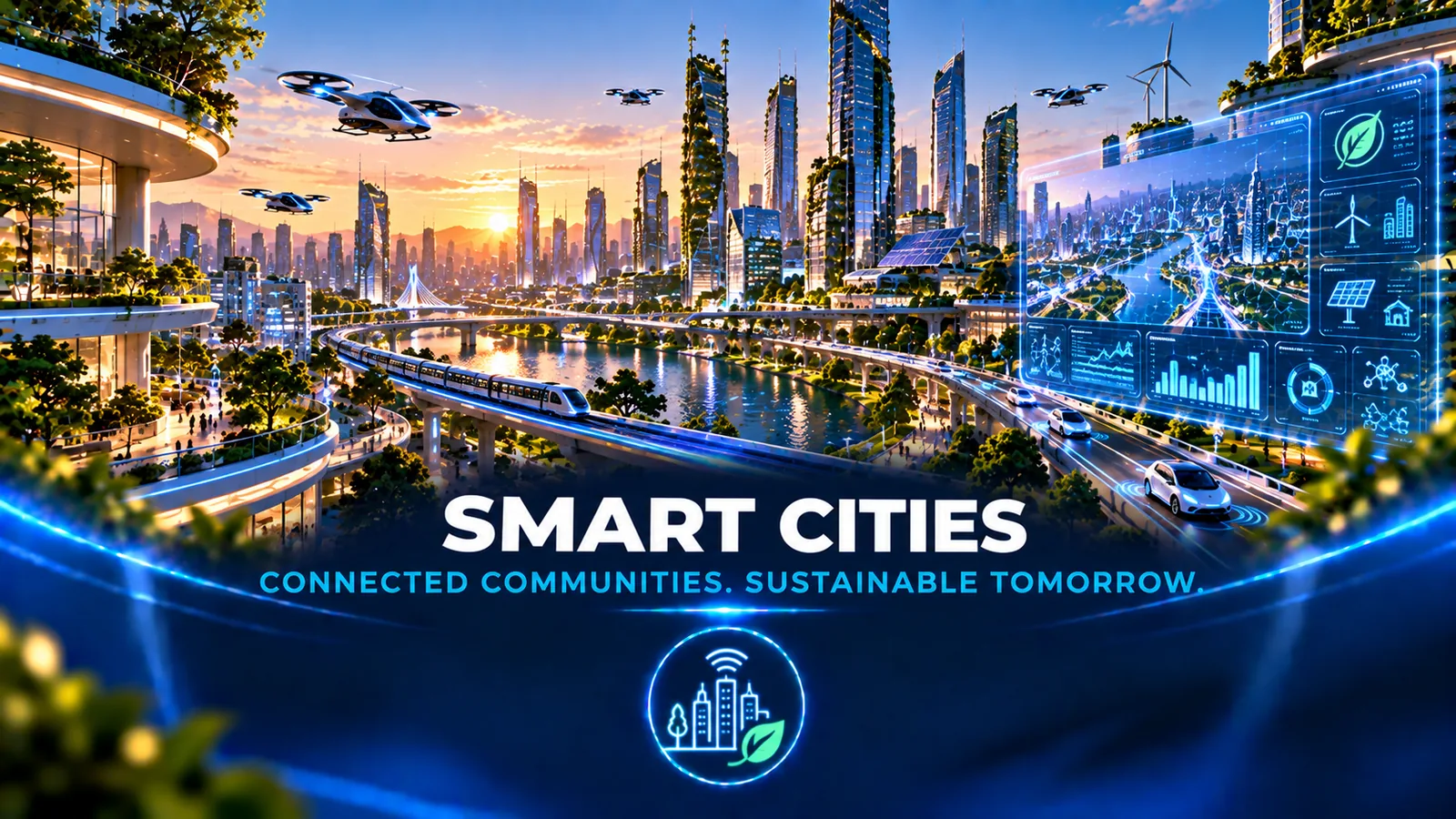
The idea, simply
A different way to see what is possible
A smart city uses information and connected infrastructure to improve urban life. Its intelligence lies in how well it serves people: buildings, transport, water, energy and public services need to work as a coherent system.
Current reality
Where we are today
Cities use digital tools to monitor infrastructure and plan services. Data quality, fragmented systems, budgets and public accountability limit what those tools can achieve.
Future possibility
What could come next
Better coordination could help cities adapt to heat, disruption and changing needs. Digital models and connected services need real-world validation, privacy protections and meaningful community involvement.
Human outcomes
Why it matters
Livability means accessible services, healthy public spaces and infrastructure people can rely on. Technology should support those goals while avoiding exclusion and unnecessary surveillance.
- More resilient neighbourhood infrastructure
- Services planned around residents’ needs
- Better coordination of energy and mobility
Connected technologies
Featured episode
When Stations Become a Network
Capability, not a field-wide rating
Reading the possibilities
- EmergingConnected monitoring of urban infrastructure
Real deployments support selected services; capability and integration vary by city.
- ImaginedA city operating as one adaptive system
The coordinated future explored here requires governance, privacy and community participation.
Labels apply to these specific capabilities. How to read the four classifications.
Keep exploring
Connected in the Universe
Related technologies
Related episodes
What If?